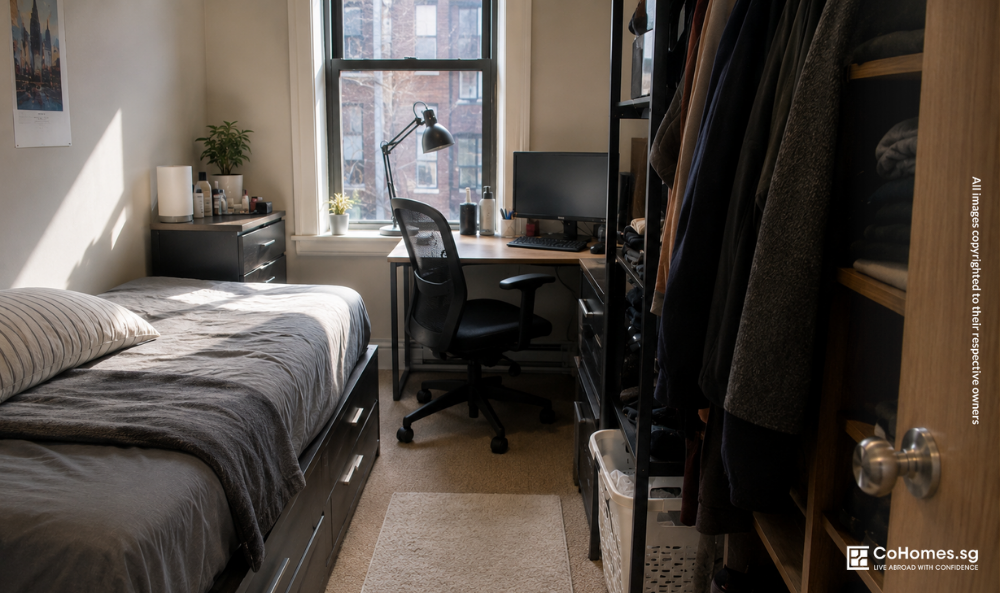
For years, the traditional idea of a “good home” was fairly straightforward: more space, more privacy, and more room to grow.
But for many young renters in Singapore today, that definition is starting to look different.
Instead of asking, “How much space can I get for my budget?”, more renters are asking:
- How close am I to work?
- Will I have more time for myself?
- Can I live near the people and places I care about?
- Does this lifestyle support my goals and wellbeing?
The shift may seem subtle, but it reflects a bigger change in how younger generations think about housing.
For a growing number of renters, experiences are becoming more valuable than square footage.

Why Space Is No Longer the Ultimate Priority
Singapore has always been a city where space comes at a premium.
However, the change in renter priorities is not simply about accepting smaller homes because of rising costs. Many young professionals actively choose living arrangements that maximise convenience, flexibility, and lifestyle opportunities, even if that means sacrificing extra space.
The reason is simple: most people spend more time living their lives outside their rooms than inside them.
When work, social activities, fitness, dining, and entertainment are all easily accessible, a larger bedroom may no longer feel like the most important feature of a home.
What matters more is how a living arrangement supports daily life.
Time Is Becoming More Valuable Than Space
One of the biggest factors driving this shift is time.
Many renters are realising that a larger room may not necessarily improve their quality of life if it comes with:
- Longer commutes
- Higher transport costs
- Less convenient locations
- Reduced flexibility
Imagine two different scenarios.
In the first, you have a spacious room but spend nearly two hours commuting every day.
In the second, your room is smaller, but you live close to work, friends, gyms, cafés, and public transport.
For many young renters, the second option feels like a better trade-off.
The time saved each day often creates more value than the extra square metres.
Lifestyle Is Becoming Part of the Housing Decision
Housing decisions are increasingly tied to lifestyle choices.
Today’s renters are evaluating homes based on questions such as:
- Can I maintain a healthy routine here?
- Is the neighbourhood aligned with my interests?
- Will I enjoy living in this area?
- Does the location support my work-life balance?
This mindset reflects a broader trend across Singapore and other major cities in Southeast Asia.
People are no longer viewing housing as an isolated decision. Instead, they see it as part of a larger lifestyle ecosystem.
A home is not just where you sleep. It influences how you spend your time, manage your energy, and experience everyday life.
The Rise of Flexible Living
Another reason experiences are becoming more important than space is the growing demand for flexibility.
Many young renters today are navigating:
- Career transitions
- Hybrid work arrangements
- Further education
- International opportunities
- Changing personal priorities
As a result, committing to a large, long-term living arrangement may feel less appealing than maintaining flexibility.
This helps explain the growing popularity of:
- Co-living spaces
- Shared apartments
- Flexible lease arrangements
- Fully furnished rentals
These options allow renters to adapt more easily as their circumstances evolve.
Community Is Becoming a Lifestyle Benefit
For many renters, particularly those living away from family, housing is also becoming a source of social connection.
This is especially relevant for:
- Young professionals relocating to Singapore
- International students
- Expats
- Remote workers
Living environments that provide opportunities to meet people and build community are becoming increasingly attractive.
The value of a home is no longer measured solely by its physical dimensions.
In many cases, access to meaningful social experiences can contribute more to overall satisfaction than having additional personal space.
Young Renters Are Spending Differently
The shift towards experiences is also reflected in spending habits.
Many renters would rather allocate part of their budget towards:
- Travel
- Fitness memberships
- Dining experiences
- Personal development
- Social activities
rather than spending significantly more on additional living space that may not be fully utilised.
This does not mean space has become unimportant.
Instead, renters are becoming more intentional about where they choose to invest their money.
The focus is moving from ownership and accumulation towards flexibility and experiences.
What This Means for the Future of Renting
As renter preferences continue evolving, housing providers and landlords may need to think beyond traditional selling points.
Factors that are becoming increasingly important include:
Location and accessibility
Easy access to transport, workplaces, and lifestyle amenities.
Flexibility
Lease options that accommodate changing life circumstances.
Community
Living environments that foster meaningful connections.
Convenience
Reducing everyday friction through simpler living arrangements.
Overall experience
Creating spaces that support how people actually live today.
The future of renting is becoming less about maximising space and more about maximising quality of life.
Is More Space Still Important?
Of course.
There will always be renters who prioritise larger homes, greater privacy, or dedicated workspaces.
The key point is not that space no longer matters.
Rather, it no longer dominates the decision-making process in the way it once did.
Today’s renters are balancing multiple factors:
- Lifestyle
- Convenience
- Mental wellbeing
- Community
- Flexibility
- Financial priorities
Space is simply one part of a much bigger equation.
Final Thoughts
The modern renter's definition of value is changing. For many young people in Singapore, the goal is no longer to secure the largest possible room. Instead, it is to create a lifestyle that feels balanced, flexible, and fulfilling.
As work patterns, social habits, and personal priorities continue evolving, experiences are becoming an increasingly important part of housing decisions. A smaller room in the right environment may ultimately deliver more happiness than a larger space that limits how someone wants to live.
At CoHomes, we understand that a home is about more than square footage. It is about supporting the lifestyle, flexibility, and experiences that matter most to modern renters.