Remote work is no longer temporary. For many professionals renting in Singapore, working from home is now part of daily life. But designing a productive workspace inside a small rental can feel challenging, especially when space is limited and lease rules restrict modifications.
The good news is this.
You do not need a separate room to build a focused, high-performing work environment.
You only need the right corner, designed intentionally.
Why Your Work Corner Matters More Than Size
In a compact Singapore rental, space serves multiple purposes.
Your bedroom may double as your office.
Your dining table may function as your desk.
Without structure, boundaries blur. Productivity drops. Mental fatigue increases. A defined work corner creates:
- Visual separation between work and rest
- Psychological boundaries
- Better focus during working hours
- Easier shutdown after work
Even in a small apartment in Singapore, clarity of space drives clarity of mind.
Step 1: Choose Location Based on Light, Not Convenience
Many renters place their desk wherever it fits.
A smarter approach is to choose based on natural light. Position your desk:
- Near a window for daylight
- Perpendicular to light to avoid screen glare
- Away from high-traffic walkways
Natural light improves focus, reduces eye strain, and enhances mood. In smaller rentals, this makes a significant difference.
Step 2: Invest in the Right Chair Before Anything Else
In a compact rental, space is limited. But comfort cannot be compromised. If budget allows, prioritise:
- Ergonomic chair support
- Proper back alignment
- Adjustable height
A good chair improves posture and long-term health more than any aesthetic upgrade. Productivity is physical before it is mental.
Step 3: Create Vertical Storage Instead of Expanding Horizontally
Small-space rentals in Singapore rarely allow large desks. Instead of expanding outward, build upward.
Use:
- Slim vertical shelves
- Wall-friendly adhesive hooks
- Stackable desk organisers
This keeps your surface clear while maintaining accessibility, a clean desk reduces cognitive overload.
Step 4: Separate Work Energy From Rest Energy
One of the biggest remote work challenges in rentals is the inability to “switch off.” You can create separation by:
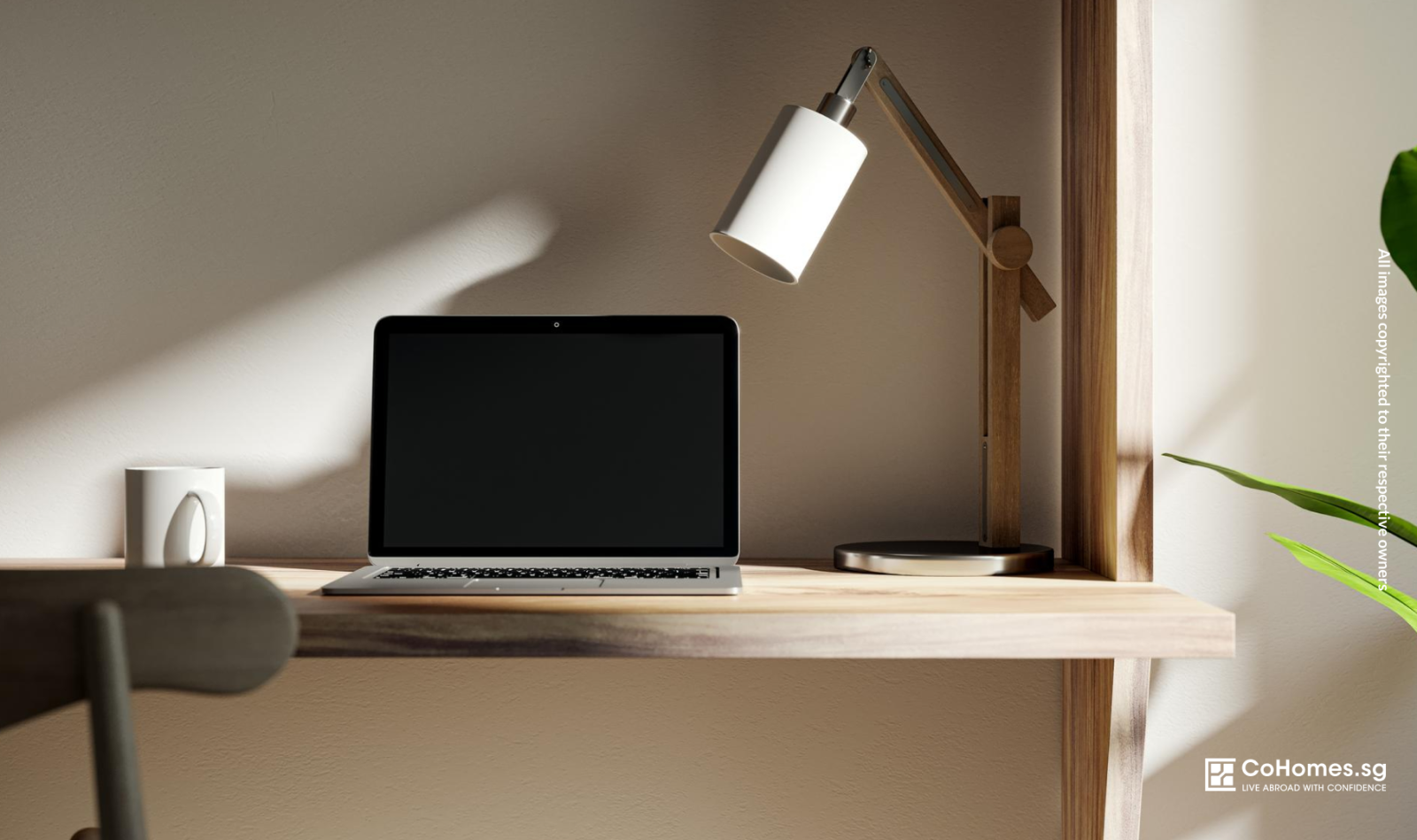
- Using a desk lamp that only turns on during work hours
- Placing a small rug under your desk area
- Facing your desk away from your bed
These visual cues help your brain recognise when you are in work mode versus rest mode.
Step 5: Control Background, Not Just Desk Space
If you attend video meetings, your background matters. You do not need renovations. You can:
- Use a neutral wall
- Add one small plant
- Keep the space uncluttered
A clean, simple background builds professionalism without changing the structure of your rental.
Step 6: Design for Shutdown Rituals
Productivity is not just about starting work. It is about ending it. At the end of the day:
- Close your laptop
- Clear your desk surface
- Turn off your work lamp
Small rituals signal closure. In small Singapore rentals, this prevents your entire home from feeling like an office.
Step 7: Prioritise Stability When Choosing a Rental
If remote work is long-term, workspace should be part of your rental criteria. When evaluating a Singapore rental, consider:
- Layout flexibility
- Natural lighting
- Noise levels
- Built-in desk areas
Your home environment directly affects your professional output.
Productivity Is Designed, Not Assumed
Many renters believe productivity depends on motivation. In reality, environment shapes behaviour. Even in a small apartment in Singapore, intentional layout and structured design can significantly improve:
- Focus
- Energy levels
- Work-life balance
- The goal is not a bigger home.
- The goal is a smarter corner.
Final Thought
Remote work has changed how we use our homes. Rentals are no longer just places to sleep. They are living, working, and thinking environments.
At CoHomes, we understand that modern renters need spaces that support both life and productivity. A well-designed rental does not require more square footage. It requires thoughtful structure.
Because in small spaces, intention makes the biggest difference.